


You do not need a storefront, a big loan, or years of experience to start a business. You can start one from your kitchen table with a laptop and a skill people will pay for.
So how do you start a small business at home? Pick an idea you can sell, test it with real buyers, register it, and open for business. This guide covers how to start a small business at home step by step, from the idea to your first sale. The U.S. Small Business Administration (SBA) breaks the job into ten steps and this guide walks you through each one in plain words.
A home business starts with a laptop, a skill, and a customer who will pay for it.
A home-based business is a business you run from your home. It can be fully online, like freelance writing, or it can serve local customers, like a cleaning service. The SBA counts your home as a business location. The same rules apply: you still need to register, pay taxes, and follow local rules.
Pick a Business Idea You Can Start at Home
Start with what you already know how to do. The cheapest way to start a small business at home is a service built on a skill you already have.
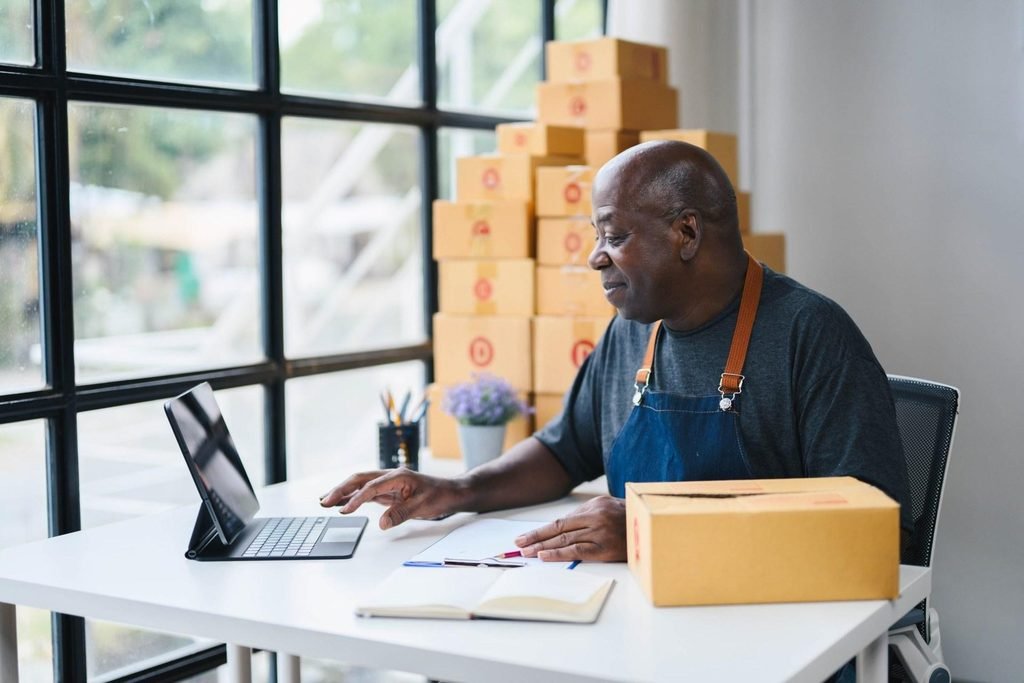
A product business needs space for stock. A service business needs only your skill and a laptop.
Here are low-cost home business ideas that real people start with little money:
Freelance writing and editing. You need a laptop and clear writing. Beginners often earn $0.05 per word while writers with a niche earn $0.20 to $0.50 per word. Startup cost is $0 if you already own a computer.
Virtual assistant services. You handle inbox cleanup, calendars, data entry, and customer service for busy owners. Starting rates run $15 to $25 per hour.
Online tutoring or coaching. Teach a subject or a skill you know well over video calls.
Print-on-demand. You design shirts, mugs, or posters and a print partner makes and ships each order. Platforms like Printful and Printify are free to join.
A good idea passes three tests: you enjoy the work, you already own most of the tools, and real people already pay for it. If an idea fails any test, pick another one.
Validate Your Idea Before You Spend Money
Do not spend money before you know someone will buy. Validation is the cheapest step in how to start a small business at home: test your idea with real people while it is still cheap to change.
Talk to at least 10 people who match your target customer. Ask what they buy now, what frustrates them, and what they would pay for a better option.
Then sell a small version first. Offer your service to three people at a discount in exchange for honest feedback and a testimonial. A few early sales tell you more than months of planning. Also read your competitors’ reviews: the complaints there are your opening.
Write a Simple Business Plan
A business plan is a written document that describes your business, your goals, and how you will reach them. The SBA calls it the foundation of your business. A short plan that answers five questions is enough.
What will you sell and to whom? How will you reach those customers? What will you charge and what will it cost you? How much money do you need to start?
Write your answers on one or two pages: your monthly costs, your price, and how many sales you need to cover those costs. If the numbers do not work on paper, they will not work in real life either.
Choose a Business Structure
Your business structure decides how you pay tax and how much risk you carry. One early choice in how to start a small business at home is the structure. Most home businesses start with one of two options.
| Structure | Setup cost | Liability | Taxes |
| — | — | — | — |
| Sole proprietorship | Lowest, often $0 to register | You are personally liable | Business income on your personal return, Schedule C |
| LLC | State filing fee, varies by state | Separates personal and business assets | Same as sole proprietorship by default, or elect S corp tax |
| S corporation | Higher setup and running costs | Separates personal and business assets | Owners pay a salary plus distributions |
A sole proprietorship is the simplest way to start. You and the business are one legal person so setup is fast and cheap. The trade-off is risk: if the business owes money or gets sued, your personal savings and home can be on the line.
An LLC gives you a legal wall between your personal assets and your business. Filing fees vary widely by state: Kentucky charges $40, New York charges $200, Texas charges $300, and Massachusetts charges $500. California charges $70 to file plus an $800 annual franchise tax. Check your own state before you budget.
A single-member LLC is taxed like a sole proprietorship by default: the same Schedule C and the same self-employment tax of 15.3% on net earnings of $400 or more. An S corporation election can save tax once profits pass about $60,000 a year but it adds payroll and paperwork.
Register Your Business and Get Your EIN
Once you pick a structure, make it official. First, choose a business name and check that no one else in your state uses it.
If you use a name other than your own legal name, most states ask you to file a “doing business as” (DBA) registration. The fee is usually small but it varies by state.
Next, get an employer identification number (EIN) from the IRS. An EIN is like a Social Security number for your business. It is free and you can apply online at irs.gov in a few minutes. You need an EIN to open a business bank account and file business taxes. Even with no employees, get one anyway.
If you form an LLC, file your articles of organization with your state first, then get your EIN.
Licenses, Permits, and Zoning Rules
A home business still needs licenses and permits. Which ones you need depends on your state, your city, and what you sell. Common ones include a general business license, a sales tax permit, and a home occupation permit.
Zoning is the rule most new owners miss. Some neighborhoods limit home businesses, and your city may ban customer visits, outdoor signs, or extra cars parked outside. Call your city planning office before you launch.
If you sell food from home, check your state’s cottage food law. Many states allow low-risk foods like baked goods and jam from a home kitchen but the rules differ. If you sell products online, you may also need to collect sales tax in states where you have customers. The rules changed after the 2018 Supreme Court decision in South Dakota v. Wayfair, so check your state tax agency.
Set Up Your Home Office
You need a dedicated workspace, even if it is just a desk in a corner. A set space helps you focus and it also matters for taxes.
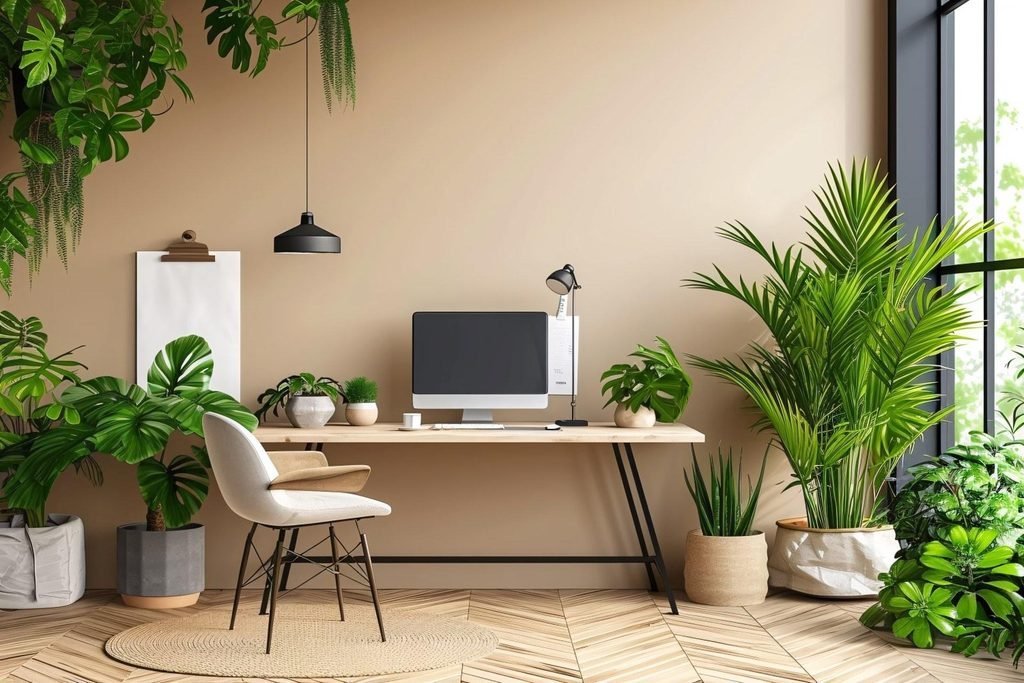
A dedicated workspace helps you focus and can also qualify for a tax deduction.
The IRS home office deduction has two methods. The simplified method gives you $5 per square foot, up to 300 square feet, for a maximum of $1,500 a year. The regular method uses Form 8829 and deducts your business share of home costs. It often gives a bigger number but needs detailed records.
Both methods share one strict rule: the space must be used regularly and exclusively for business. A desk in a corner of a room you also live in does not meet that test.
W-2 employees generally cannot claim a home office deduction for remote work. The deduction is for self-employed people who report business income on Schedule C. Check the current IRS guidance before you file.
Set up your office for real work, not just for taxes. Get a chair that supports your back, light that does not strain your eyes, and internet fast enough for video calls.
Fund Your Home Business
Most people who learn how to start a small business at home begin with savings and that is often the smartest route. Service businesses can start for under $100 if you already own a computer and a phone. Product businesses cost more since you need materials, packaging, and shipping.
Funding is the step most people worry about when they learn how to start a small business at home. The SBA offers several loan programs, and SBA microloans go up to $50,000 through community lenders. You need a business plan and a credit check.
Watch out for grant scams. The SBA states clearly that there are no federal grants to start a business. Anyone who charges you a fee to unlock a government startup grant is running a scam.
Keep your money separate from day one. Open a business checking account as soon as you start taking in money. The SBA advises this for legal, tax, and day-to-day reasons.
Market Your Home Business on a Budget
You do not need a big ad budget to find your first customers when you start a small business at home. You need to be where your customers already look.
Start with a simple website or a Google Business Profile. A one-page site with your services, your prices, and a way to contact you is enough.
Use the platforms your customers already use: freelancers find work on Upwork and Fiverr, makers sell on Etsy, and local services get found on Nextdoor.
Ask every happy customer for a review and a referral. Reviews are the cheapest marketing a small business can buy because they cost you nothing.
7 Mistakes to Avoid When You Start a Small Business at Home
New owners repeat the same mistakes when they start a small business at home. Here are the costliest ones.
Skipping the legal steps. Registering late or ignoring zoning rules can lead to fines.
Mixing money. One account for business and personal spending makes tax time painful.
Underpricing your work. Low prices attract customers but starve your business.
Ignoring taxes. Set aside money from every payment for income tax and self-employment tax.
Trying to do everything. You cannot be the maker, the marketer, the bookkeeper, and the support desk forever.
No written plan. A business without a plan drifts.
Giving up too early. Most home businesses take months to find steady customers.
Frequently Asked Questions
How do I start a small business from home?
Pick an idea based on a skill you already have, test it with a few real buyers, write a short business plan, choose a structure, register your business, get a free EIN from the IRS, and open a business bank account. That is how to start a small business at home in the SBA’s ten steps.
Do I need a license to run a business from home?
It depends on your state, your city, and what you sell. Many freelance and online businesses need only a basic registration but food, childcare, and health businesses often need extra licenses.
What is the cheapest business to start from home?
The cheapest home businesses are service-based, like freelance writing, virtual assistance, and social media management. They can start for $0 to $100.
Can I start a business from home with no money?
Yes, if you sell a skill you already have. Freelance writing, virtual assistance, and tutoring need no upfront money beyond a computer and internet.
Do I need an LLC to start a home business?
No. You can start as a sole proprietor with no filing at all in most states. An LLC adds legal protection but it costs a state filing fee.
How much money do I need to start a small business at home?
Service businesses often start for under $100. A basic online store runs about $10 to $20 a year for a domain plus $5 to $30 a month for hosting.
Can I claim a home office deduction?
If you are self-employed and use part of your home regularly and exclusively for business, yes. The simplified method gives $5 per square foot up to 300 square feet, or $1,500 a year at most.
Do I need a separate bank account for my home business?
Yes. The SBA advises every new owner to open a business bank account as soon as the business starts taking in money.
How long does it take to start a small business from home?
A simple service business can launch in a week or two. A product business or one that needs licenses takes longer. The SBA notes the full process can take from a month to a year. Start the paperwork early.
This guide is general information only. It is not legal, tax, or financial advice. Check your state and city rules and talk to a licensed professional before you act.
Keep learning: Best AI Chatbot in 2026 and Character AI No Sign Up.
