


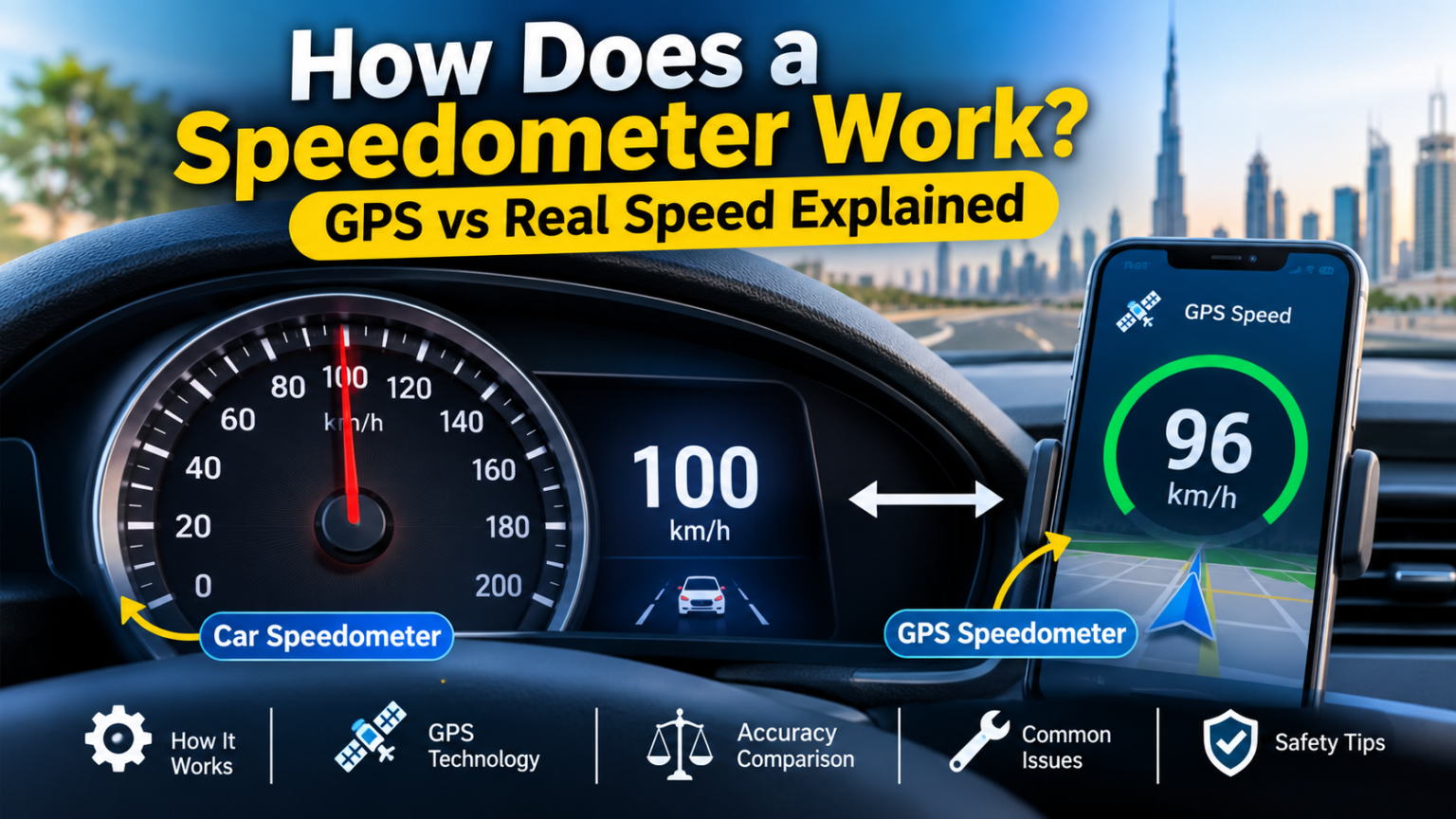
A speedometer is an instrument that tells drivers how fast their vehicle is moving. It is one of the most important parts of a car, motorcycle, or other vehicle because it helps drivers monitor their speed and follow road safety rules. However, many drivers notice that their dashboard speedometer and a GPS speedometer sometimes show different readings.
Understanding how a speedometer works can explain why these differences happen and which measurement method is more useful.
Modern vehicles use electronic sensors to calculate speed, while GPS devices estimate movement using signals received from satellites. Both methods have advantages and limitations. Factors such as tyre size, road conditions, satellite signals, and sensor calibration can affect the displayed reading.
This guide explains how different speedometers operate, how GPS measures speed, why readings can vary, and how to check your actual driving speed safely.
What Is a Speedometer?
A speedometer is a measuring instrument installed in a vehicle to display its current speed. It normally shows speed in kilometres per hour (km/h), miles per hour (mph), or both, depending on the vehicle and its market.
For example, if your car dashboard displays 80 km/h, it means the vehicle’s speed measurement system estimates that the car is travelling at approximately 80 kilometres per hour.
Speedometers are available in different designs:
- Analog speedometers: Display speed using a moving needle and numbered dial.
- Digital speedometers: Show speed as numerical values on an electronic screen.
- GPS speedometers: Calculate speed using satellite-based positioning signals.
Although their displays look different, their main purpose is the same: to provide drivers with information about vehicle speed.
How Does a Speedometer Work?
A speedometer does not usually measure speed by directly watching how far a vehicle travels. Instead, it measures another movement, such as wheel rotation, and uses that information to calculate speed.
In modern cars, electronic sensors detect how quickly the wheels or transmission components rotate. The vehicle’s electronic control system processes these signals and converts them into a speed reading.
The basic calculation depends on two measurements:
- How frequently the wheel or another rotating component moves.
- The distance covered during each complete rotation.
For example, when a wheel rotates faster, the vehicle generally travels faster. The speedometer uses the rotation data and the vehicle’s programmed specifications to estimate the current speed.
Older mechanical systems use a different arrangement involving a rotating cable and magnetic components. Electronic systems are now more common in modern vehicles.
Different Types of Speedometers
Speedometers have developed over time. Older vehicles relied on mechanical technology, while modern vehicles use electronic sensors and digital displays.
1. Mechanical Speedometer
A mechanical speedometer is commonly found in older cars and motorcycles. It uses a flexible rotating cable connected to a rotating part of the vehicle.
As the vehicle moves, the cable rotates. This movement drives a magnet inside the speedometer mechanism. The rotating magnetic field produces a force that moves a metal cup connected to the display needle.
The faster the cable rotates, the further the needle moves across the dial.
Mechanical speedometers are relatively simple, but their readings can be affected by cable wear, mechanical damage, and calibration problems.
2. Electronic Speedometer
Electronic speedometers are widely used in modern vehicles. Instead of depending on a mechanical cable, they receive electronic signals from sensors.
A vehicle speed sensor or wheel-speed sensor detects rotation and sends signals to the vehicle’s electronic control unit (ECU) or instrument cluster.
The system processes the signals and calculates the vehicle’s speed. The result appears on the dashboard as a needle movement or digital number.
Electronic systems offer several benefits:
- Fewer mechanical moving parts.
- Easy integration with modern vehicle electronics.
- Compatibility with digital dashboards and driver assistance systems.
- Better opportunities for electronic monitoring and diagnostics.
3. Digital Speedometer
A digital speedometer displays vehicle speed using numbers instead of relying only on a traditional needle.
It receives speed information from the vehicle’s electronic system and displays it on an LCD, TFT, or other digital screen.
Some vehicles allow drivers to switch between different display styles, including digital speed readings, analog-style gauges, and head-up displays.
A digital display does not necessarily measure speed more accurately than an analog one. Its accuracy depends on the sensors and calculations supplying the information.
How Does a Car Speedometer Work?
A car speedometer generally uses information from wheel-speed sensors, transmission sensors, or other vehicle speed measurement components.
In many modern cars, wheel-speed sensors detect the rotation of toothed rings or magnetic encoder components. These sensors generate signals that the vehicle’s electronic system can interpret.
The process normally follows these steps:
- Wheel movement: The vehicle’s wheels rotate as the car moves.
- Sensor detection: Sensors detect wheel rotation and generate electronic signals.
- Signal processing: The vehicle’s control system processes the signals.
- Speed calculation: The system uses rotation information and programmed calibration data to estimate speed.
- Dashboard display: The calculated speed appears on the instrument cluster.
Tyre circumference is an important part of this calculation. If the effective tyre size changes, the relationship between wheel rotation and actual road distance can also change.
This is one reason why installing tyres with an incorrect size can affect speedometer readings.
How Does a GPS Speedometer Work?
A GPS speedometer uses signals received from navigation satellites to estimate how fast a device is moving.
Unlike a traditional car speedometer, it does not need information about wheel rotation. Instead, a GPS receiver processes satellite signals and estimates the device’s movement.
GPS receivers can calculate speed using changes in satellite signal frequency, known as the Doppler effect, as well as other positioning measurements.
A GPS speedometer generally follows this process:
- The device receives signals from multiple navigation satellites.
- Its receiver processes the incoming signals.
- The device estimates its movement and velocity.
- Software converts the calculated speed into km/h or mph.
- The speed reading appears on the screen.
Smartphones, GPS navigation devices, and some vehicle tracking systems use this technology.
GPS speed measurement can be useful when comparing a vehicle’s dashboard reading with an independent reference. However, its reliability depends on satellite visibility, receiver quality, and environmental conditions.
According to GPS.gov, GPS speed accuracy depends on factors such as satellite geometry, signal blockage, atmospheric conditions, and receiver design.
GPS Speedometer vs Car Speedometer: What Is the Difference?
Both systems measure speed, but they use different technologies.
A car speedometer normally calculates speed using information from rotating vehicle components. A GPS speedometer estimates speed using satellite signals.
| Feature | Car Speedometer | GPS Speedometer |
|---|---|---|
| Technology | Vehicle sensors | Satellite signals |
| Measurement | Wheel or shaft rotation | GPS velocity |
| Internet requirement | No | No, for basic GPS reception |
| Signal limitations | Sensor and calibration issues | Satellite signal obstruction |
| Response | Usually quick | Can be delayed or smoothed |
| Main use | Monitoring vehicle speed | Independent speed reference |
Neither system is perfect in every situation.
A dashboard speedometer is designed as the vehicle’s primary speed display. A GPS device can provide a useful comparison, especially when the vehicle is travelling at a steady speed in an area with good satellite reception.
Which Speedometer Is More Accurate?
There is no universal answer because accuracy depends on the device, vehicle, measurement conditions, and applicable standards.
A GPS receiver may provide a useful speed reference under open-sky conditions. However, its reading can become less reliable around tall buildings, tunnels, bridges, and other areas where satellite signals are blocked or reflected.
Vehicle speedometers can also show differences because of tyre size, sensor calibration, and manufacturer settings.
For this reason, drivers should not assume that every GPS reading is automatically correct or that every dashboard difference indicates a vehicle problem.
Why Does Your Car Speedometer Show a Different Speed?
It is common to notice a difference between a dashboard speedometer and a GPS application.
Several technical reasons can explain this difference.
1. Tyre Size and Circumference
A vehicle’s speed calculation depends partly on tyre dimensions. If the tyre size changes, the distance covered during each wheel rotation may also change.
For example, replacing the original tyres with tyres of a significantly different rolling circumference can affect the displayed speed.
2. Tyre Pressure
Incorrect tyre pressure can change tyre deformation and effective rolling characteristics. This may contribute to differences in speed and distance calculations.
Drivers should maintain the tyre pressure recommended by their vehicle manufacturer.
3. Speedometer Calibration
Manufacturers calibrate vehicle speedometers according to vehicle specifications and applicable regulations.
Under UN Regulation No. 39, the indicated speed for vehicles covered by the regulation must not be lower than the true speed. Its specified relationship is:
0 ≤ (V1 − V2) ≤ 0.1V2 + 4 km/h
Here:
- V1 represents the displayed speed.
- V2 represents the actual vehicle speed.
This is a regulatory test relationship for vehicles covered by that regulation, not a universal accuracy rule for every vehicle worldwide.
4. GPS Signal Problems
GPS speed readings may fluctuate when the device cannot receive reliable satellite signals.
Common causes include:
- Tall buildings and urban structures.
- Tunnels and underground roads.
- Dense trees and other obstructions.
- Poor-quality GPS receivers.
5. Different Update Speeds
Vehicle instruments and GPS applications may process information at different rates.
A dashboard speedometer may respond quickly to changes in wheel rotation, while a GPS application may smooth readings to reduce fluctuations.
As a result, both displays might show slightly different values during acceleration or braking.
How to Check Your Real Driving Speed
You can compare your vehicle’s dashboard reading with a GPS speedometer using a smartphone or a dedicated GPS device.
Follow these steps:
- Choose a safe road where you can maintain a steady speed without disturbing other drivers.
- Use a reliable GPS speedometer application or browser-based tool.
- Allow the device to access its location.
- Wait until the GPS receiver obtains a stable signal.
- Have a passenger observe the GPS reading while you drive.
- Compare the GPS and dashboard readings at a steady speed.
- Repeat the comparison at another safe speed to see whether the difference remains consistent.
For example, if your dashboard displays 100 km/h while the GPS device displays 96 km/h, the two instruments have a difference of 4 km/h during that test.
This comparison is useful for understanding measurement differences, but it is not a certified vehicle calibration test.
Safety reminder: Never hold, operate, or look down at a smartphone while driving. Follow posted road speed limits and use your vehicle’s dashboard as the primary speed display.
Factors That Affect GPS Speed Accuracy
GPS technology is useful for navigation and speed measurement, but its performance depends on the surrounding environment.
Satellite Visibility
GPS receivers need suitable satellite signals to calculate movement. Open areas generally provide better signal conditions than enclosed or heavily obstructed locations.
Buildings and Bridges
Tall buildings can block or reflect satellite signals. This effect is particularly noticeable in dense urban environments.
Receiver Quality
Different smartphones and GPS devices have different receiver designs and capabilities. Better hardware may improve the quality of speed measurements.
Atmospheric Conditions
Atmospheric effects can influence satellite signal travel and contribute to measurement errors.
Device Placement
A smartphone placed where its GPS antenna receives a poor signal may produce less stable readings. Keeping the device in a suitable position can help improve reception.
GPS.gov explains these limitations in its official GPS accuracy guidance.
Speedometer Readings: KM/H vs MPH
Speedometers can display vehicle speed in kilometres per hour or miles per hour.
Kilometres per hour is commonly used in countries such as the United Arab Emirates, while miles per hour is commonly used in the United States and the United Kingdom.
The conversion is straightforward:
- 1 km/h = approximately 0.6214 mph.
- 1 mph = approximately 1.6093 km/h.
Here are some common speed conversions:
| Speed in KM/H | Speed in MPH |
|---|---|
| 30 km/h | 18.6 mph |
| 40 km/h | 24.9 mph |
| 60 km/h | 37.3 mph |
| 80 km/h | 49.7 mph |
| 100 km/h | 62.1 mph |
| 120 km/h | 74.6 mph |
| 140 km/h | 87.0 mph |
Drivers should always check the unit displayed on their dashboard, particularly when driving a vehicle imported from another market.
Common Speedometer Problems and Their Causes
A speedometer that stops working or displays unusual readings may indicate a problem with the vehicle’s sensors, wiring, or instrument cluster.
| Problem | Possible Cause |
|---|---|
| Speedometer shows zero | Sensor or wiring fault |
| Reading jumps frequently | Unstable sensor signal |
| Speed appears consistently high | Tyre size or calibration difference |
| Digital display disappears | Electrical or display problem |
| Speedometer stops working | Sensor, fuse, or instrument cluster issue |
These symptoms do not always identify one specific faulty component. A proper vehicle inspection is needed to determine the cause.
If your speedometer suddenly stops working, behaves unpredictably, or displays readings that seem unreasonable, consult a qualified automotive technician.
Frequently Asked Questions
How does a speedometer work in a car?
A modern car speedometer generally uses electronic sensors to detect wheel or transmission rotation. The vehicle’s electronic system processes these signals and calculates speed using programmed vehicle specifications.
Is a GPS speedometer more accurate than a car speedometer?
A GPS speedometer can provide a useful independent speed reference under suitable satellite conditions. However, its accuracy depends on receiver quality, signal visibility, and environmental conditions. It is not automatically more accurate in every situation.
Why does my speedometer show more speed than GPS?
Vehicle speedometers may be calibrated to display a speed that is equal to or higher than the true speed under applicable regulations. Tyre circumference and calibration can also contribute to differences.
Can I check my car speed using my phone?
Yes. A smartphone with GPS capabilities can use a suitable application or browser-based speedometer to estimate movement speed. Location permission and a reliable satellite signal are normally required.
Does GPS speed work without an internet connection?
Basic GPS positioning and speed measurement do not require an active internet connection. However, some applications may need internet access for maps, additional services, or initial data downloads.
What is the difference between an analog and digital speedometer?
An analog speedometer displays speed using a moving needle and numbered dial. A digital speedometer displays speed as numerical values on an electronic screen. Both can receive information from the same vehicle speed measurement system.
Can tyre changes affect speedometer accuracy?
Yes. Changing tyre dimensions can alter the distance travelled during each wheel rotation. If the new tyre size differs significantly from the manufacturer’s specification, the speedometer reading may also change.
What should I do if my speedometer stops working?
Check the vehicle owner’s manual and arrange an inspection by a qualified mechanic. The problem may involve a speed sensor, electrical connection, fuse, or instrument cluster.
Conclusion
Understanding how a speedometer works helps drivers make better decisions and understand why different devices can display different speeds. Traditional mechanical speedometers use rotating cables, while modern vehicles generally rely on electronic sensors and digital processing. GPS speedometers use satellite signals to estimate movement independently of vehicle wheel rotation.
Both technologies have practical advantages, but their accuracy depends on different conditions. Tyre dimensions, sensor calibration, satellite visibility, and device quality can all influence speed readings.
For everyday driving, use your vehicle’s speedometer, follow posted road limits, and treat GPS readings as a useful reference rather than a replacement for the vehicle’s required speed display.

